English vs. Continental Knitting
Compare yarn-control hands, sample both knit and purl fabric and check gauge before switching methods.
In this guide
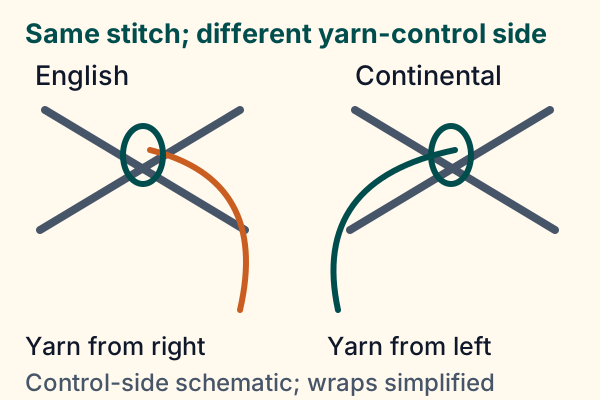
English knitting usually controls the working yarn in the right hand; Continental usually controls it in the left. Both can make the same knit and purl fabric. Choose by how well you can form consistent stitches with a relaxed setup, then check gauge. Neither label promises faster knitting or relief from a medical condition.
| Question | English | Continental |
|---|---|---|
| Yarn control | Right hand in the usual setup | Left hand in the usual setup |
| Common action | Wrap or flick yarn around the working needle | Pick yarn using the working needle |
| What stays essential | Correct entry, wrap and loop transfer | Correct entry, wrap and loop transfer |
| Best comparison | Your fabric and comfort in the intended pattern | Your fabric and comfort in the intended pattern |
Begin with a controlled comparison
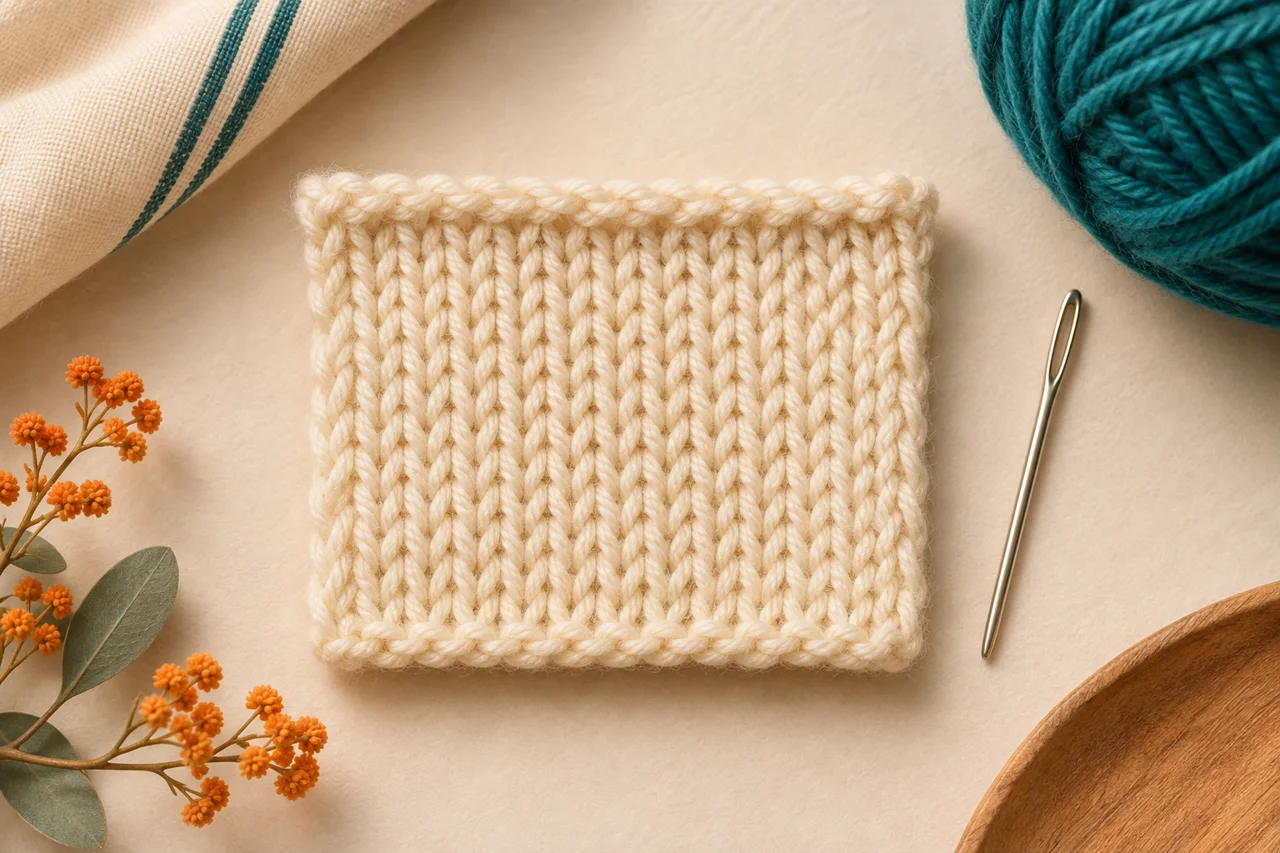
Use one smooth light yarn and needles of the same diameter and construction. Know how to cast on and identify a knit and purl before comparing methods. Start two small labeled samples with the same stitch count. Changing yarn, needle material and technique at the same time prevents you from knowing which change affected the result. Keep a note of the method and needle for each sample.
Try English yarn control
Hold the loaded needle in the left hand and the working needle in the right. Tension the ball yarn with the right hand. For an ordinary Western knit stitch, insert the right tip through the front leg of the next loop from front to back, wrap the working yarn around it, bring a new loop through and release the old loop. Some knitters lift the hand to wrap; others flick without releasing the needle. Compare a small comfortable motion rather than forcing one exact grip.
Try Continental yarn control
Keep the needles in the same usual hands but tension the ball yarn over the left hand. Insert the working needle for the same knit structure, then use its tip to catch the left-controlled yarn and pull a new loop through. Release the old loop only after the new one is held. Start slowly enough to see the whole strand. Catching only one ply can split the yarn; catching a strand on the wrong side or changing the wrap can change stitch mounting.
Include purling and the actual project stitches
A few garter rows test only part of a method. Add a short stockinette section and a rib section if your project includes purling and yarn transfers. Move yarn between needles rather than over a tip when changing knit to purl unless a yarn-over increase is intended. Continental purl has several variations; the label does not require adopting Norwegian purl or combination knitting. If you change the wrap direction, learn the matching entry method so you do not unintentionally twist the following row.
Choose from observable results
After a few short sessions, compare dropped or split stitches, ability to move loops along the shaft, evenness, and how tightly you grip the tools. Rest and change position if the motion becomes uncomfortable. A crocheter accustomed to controlling yarn in the left hand may find Continental familiar, but this does not determine which knitting method will work better. An established English knitter may gain more from refining their current motion than replacing it.
Switching during a real project
Finish both samples as the yarn label permits and compare dry gauge in the intended stitch pattern. If the new method changes gauge, do not insert an abrupt band into a fitted garment without resampling and deciding how to preserve its dimensions. Keep the original method for the project while learning on a separate square if needed. For stranded colorwork, holding one color in each hand is another technique; dominance also depends on the yarn paths, not simply which hand is dominant.
Use the gauge calculator for the measured difference, and the row-count lesson to compare like-sized sections. A stopwatch is optional; reliable fabric and a sustainable working rhythm are more useful first checkpoints.
Plan with your gauge.
Estimate cast-on stitches and compare project width using your finished swatch.
Explore the planning toolSources & editorial notes
- Lion Brand: Glossary knit — https://www.lionbrand.com/pages/learn-glossary-k
- Editorial review: primary sources accessed 13 November 2026; original practice examples and simplified schematics. No independent hands-on test or named expert review is claimed.