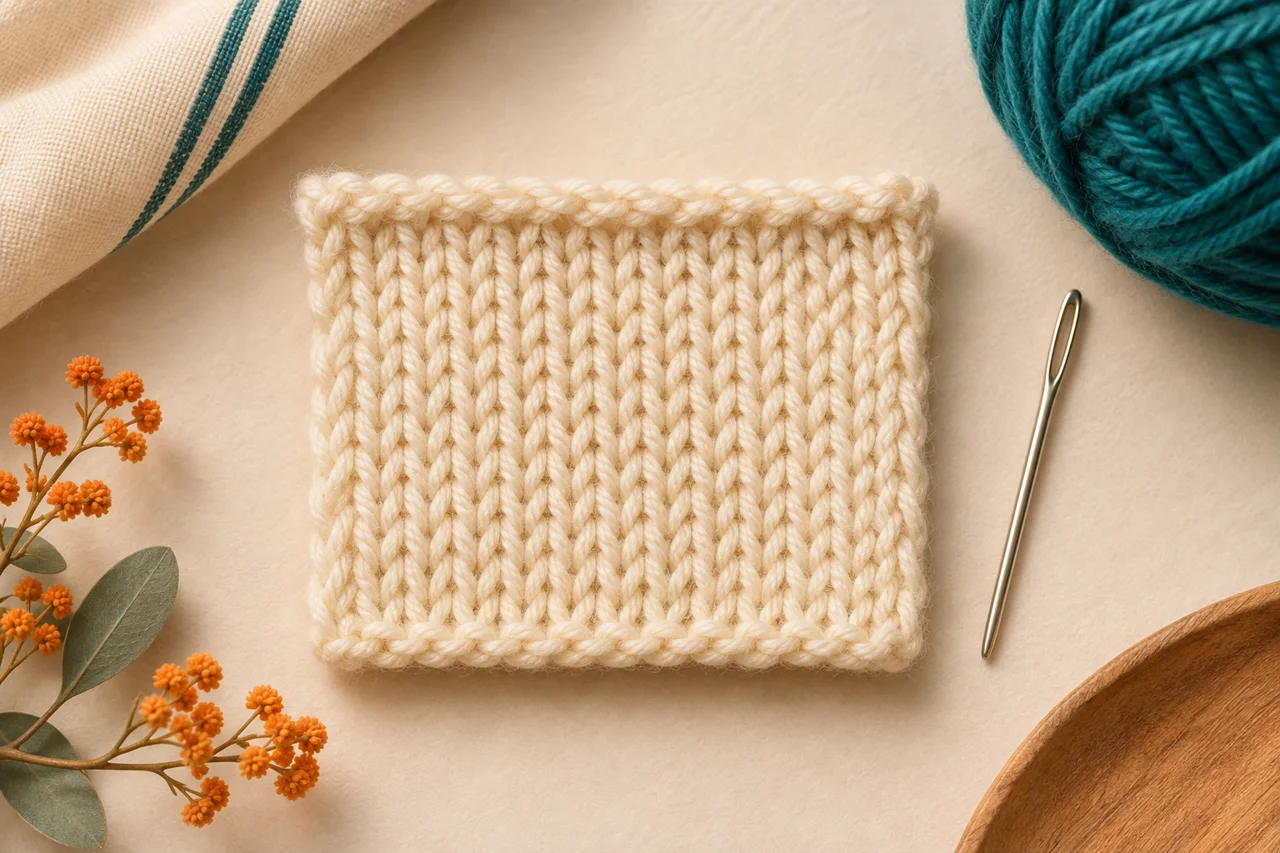
Bamboo vs. Metal Knitting Needles
Compare grip, glide, tip shape, cable joins and washed gauge to choose needles for your yarn and project.
In this guide
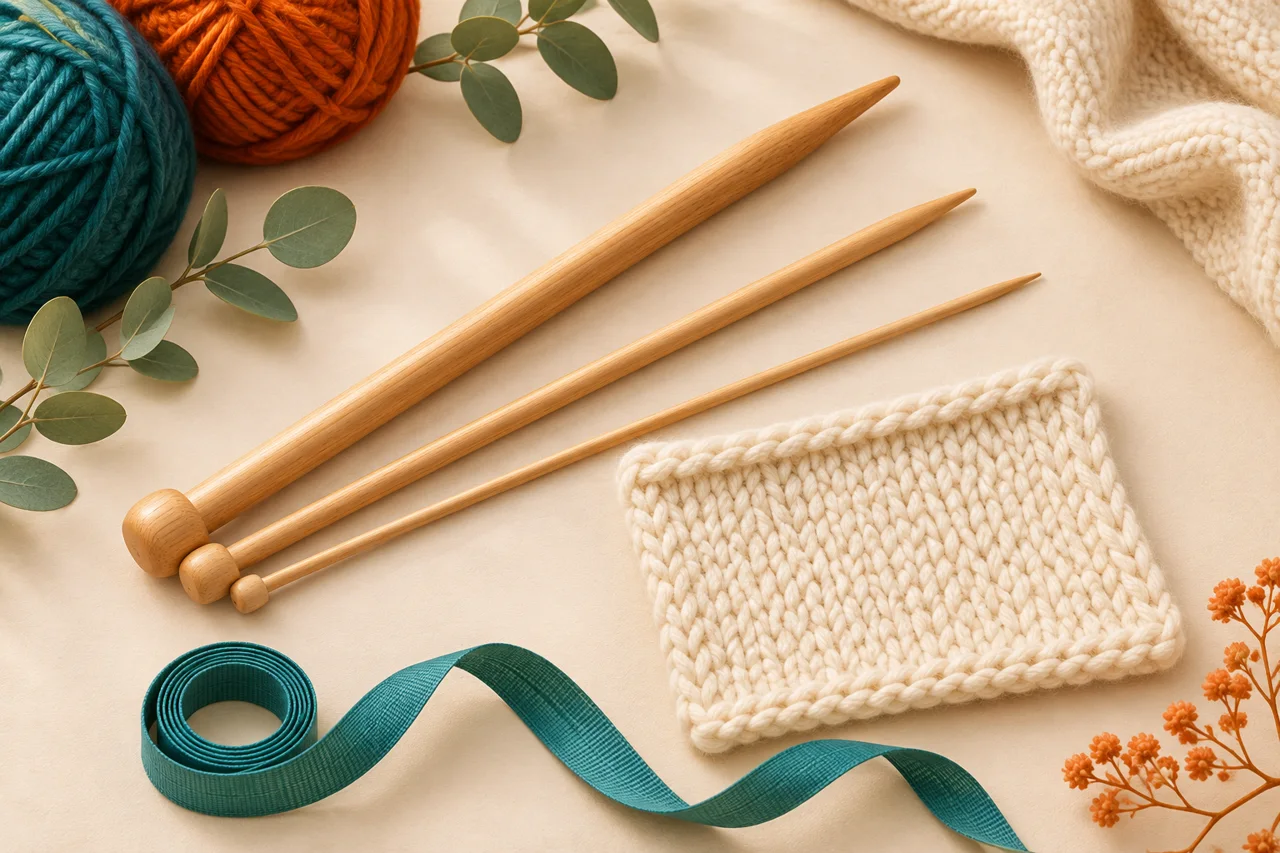
Bamboo often gives more surface grip, while polished metal often lets stitches move more freely. The useful choice depends on your yarn, tension, tip shape and needle construction. Compare the same diameter and form before choosing; a long bamboo straight and a short metal circular differ in more than material.
| Your observation | Try and check |
|---|---|
| Loops slide off before you work them | Try a grippier finish, often bamboo; check shaft movement too. |
| Stitches need repeated pushing | Try a smoother surface, often polished metal; inspect for tight tension. |
| Yarn splits during decreases | Compare tip shape and entry, not material alone. |
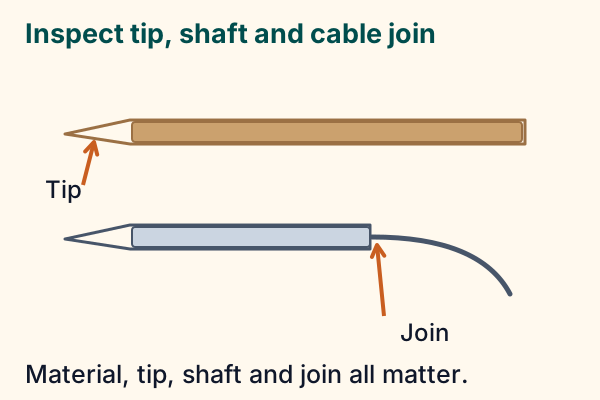
| Loops catch where cable meets tip | Inspect join smoothness and connection integrity. |
| A tool feels uncomfortable | Change setup or try another form; do not work through pain. |
What bamboo can offer
Bamboo needles are often light and warm to the touch. A little friction can make it easier to control slippery loops while learning or carrying live stitches on double points. Finish varies by manufacturer and use; bamboo is not interchangeable with every wood needle. A rough or damaged spot can snag yarn, and fine shafts need appropriate handling. Inspect the actual tool instead of assuming that a material label guarantees a perfect surface.
What metal can offer
A polished metal surface can help stitches travel when yarn drags on a grippier tool. Fine tips can suit some decreases, but metal tips can also be blunt: the taper design matters. Different metals and coatings vary in weight, feel and slickness. Smoothness does not automatically improve a beginner’s control, and faster movement is useful only if loops remain secure. If the needle is too slippery, changing material may help more than gripping it harder.
Run a fair swatch comparison
Use the intended yarn and two candidates with the same marked metric diameter, similar tip length and the same construction. If possible, compare with the same cable length and attachment system. Work separate labeled samples with the same stitch count and pattern. Include the texture you actually need: a lace decrease or tight cable may expose a tip problem that plain knit rows do not.
Observe movement rather than promises
During each sample, note whether stitches fall off, stick along the shaft, snag at a join or split when entered. Try sliding a small group of loops along the needle rather than forcing one at a time. Check whether you tense your grip to compensate. Do not time an unfamiliar tool for a few rows and treat that as a reliable speed ranking. This guide provides a comparison method; no independent performance test of particular products was conducted.
Check dimensions after changing tools
Finish the samples with the same label-permitted treatment and measure dry gauge. Even the same nominal diameter can feel different enough to alter your hand tension. If one sample has more stitches over the same width, its stitches are smaller. A switch mid-garment can produce a visible gauge band, so settle the tool choice before making the fitted piece or reswatch before changing.
Buying and care decisions
For circular needles, inspect the cable’s flexibility, the join and any interchangeable connection in addition to the tip. For straight needles, consider whether their length supports the intended stitch count comfortably. For small-circumference work, choose a suitable construction before choosing its material. Store tools so shafts and tips are protected, and replace a damaged tool that snags yarn. Manufacturer comfort language is not clinical evidence; neither bamboo nor metal is a treatment for hand or wrist pain.
For a new knitter losing loops, a sound bamboo tool is a reasonable candidate to try. For fabric dragging on the shaft, a smooth metal candidate may be useful. Choose from the sample, not a universal winner. Check the needle-size reference to ensure the comparison starts at the intended diameter.
Plan with your gauge.
Estimate cast-on stitches and compare project width using your finished swatch.
Explore the planning toolSources & editorial notes
- Lion Brand: How to Knit for Beginners — https://www.lionbrand.com/pages/how-to-knit
- Clover: Takumi bamboo specifications — https://clover-usa.com/products/takumi-bamboo-knitting-needles-circular-29-no-10-5-6-50mm
- Craft Yarn Council: Hooks & Needles — https://craftyarncouncil.com/standards/hooks-and-needles
- Editorial review: primary sources accessed 13 November 2026; original practice examples and simplified schematics. No independent hands-on test or named expert review is claimed.