
Blanket Sizes and Yarn Planning Reference
Blanket sizes are design choices rather than one universal standard.
In this guide
Blanket sizes are design choices rather than one universal standard.
| Use | Example inches | Exact centimeters |
|---|---|---|
| Small lap blanket | 36 × 48 | 91.44 × 121.92 |
| Throw | 50 × 60 | 127 × 152.4 |
| Long throw | 50 × 65 | 127 × 165.1 |
| Bed cover example | 90 × 100 | 228.6 × 254 |
Choose dimensions before estimating yarn
Measure the person, chair or bed the blanket will cover. For a bed, decide side and foot drop, whether pillows are included and whether the cover should stop above the floor. Finished dimensions refer to the washed, dried fabric; a cast-on width is not a substitute for finished gauge.
Plan length and skeins separately
For yarn, use the measured-swatch method: project area ÷ swatch area × swatch yarn used. Add borders and colors separately. Divide the resulting length by the yarn label’s length per skein and round upward. For a hypothetical purchase, 1650 total yards in 200-yard skeins needs 9 skeins; there is no reason to add an automatic tenth skein unless you deliberately want more reserve.
Save this planning record
- Finished width and length, including or excluding border.
- Yarn name, color, dye lot, label length and skein weight.
- Swatch dimensions, stitch count, yarn used and care method.
- Separate border/fringe and color requirements.
- Selected reserve and final whole-skein purchase count.
The yarn calculator prints a worksheet. This page does not advertise a separate downloadable sizing file.
Translate the size into stitches and rows
Once you choose a finished width, measure finished stitch gauge in the actual pattern. For an explicitly hypothetical gauge of 16 stitches per 4 inches, a 40-inch plain interior needs 160 stitches before border and repeat adjustments. A six-stitch repeat may require changing the count, width or edge plan; do not force an incompatible repeat by rounding silently. Measure row gauge too when the pattern specifies row counts rather than working to length. Recheck the finished swatch after permitted washing, since the blanket should be planned for its finished condition.
Why a yarn-weight yardage row is not enough
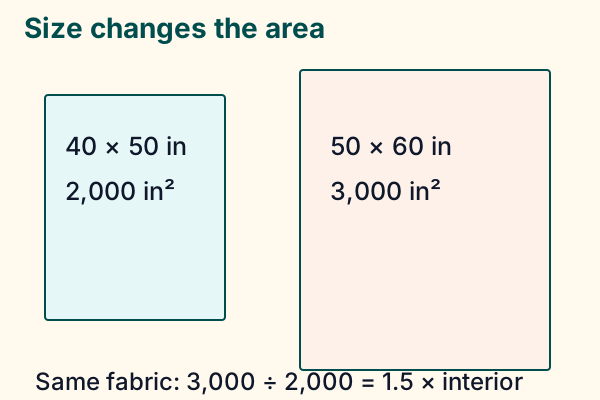
Two fabrics made from the same yarn weight can consume different lengths at the same area: tools, stitch pattern and density matter. Use a tested pattern’s stated length first, or measure your own sample consumption. The 40 × 50 to 50 × 60 inch comparison has area ratio 1.5, so an identical interior fabric can begin with 1.5 times the interior estimate. The border is not identical: its perimeter and width changed, so estimate it separately rather than hiding it in that area multiplier.
A useful estimate starts small.
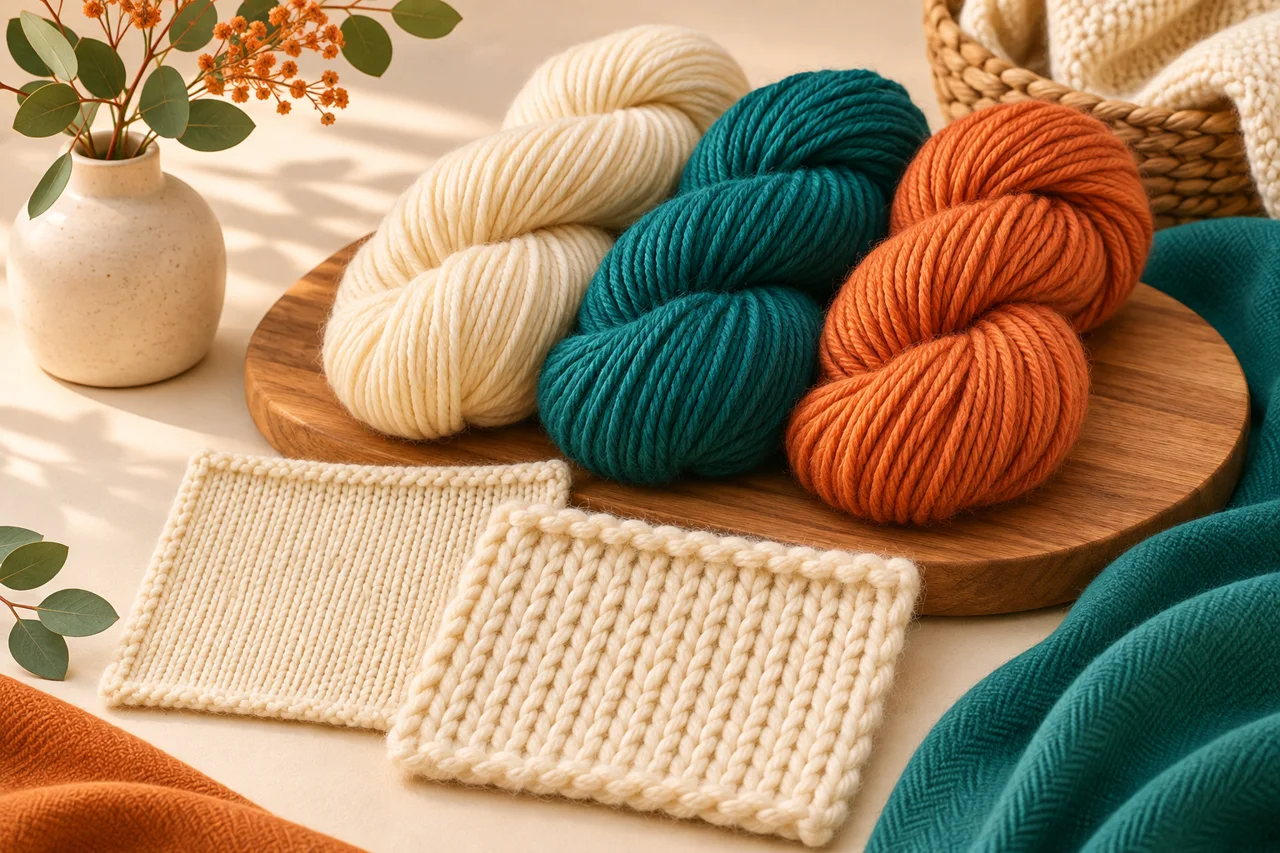
Estimate project yarn from a measured and weighed swatch, with the assumptions kept in view.
Explore the planning toolSources & editorial notes
- Lion Brand — How Much Yarn Do You Need? — https://www.lionbrand.com/pages/how-much-yarn-do-i-need
- Lion Brand — Making a Gauge Swatch — https://www.lionbrand.com/pages/how-to-knit-making-a-gauge-swatch
- Lion Brand — Yardage per skein — https://support.lionbrand.com/support/solutions/articles/17000035214-yardage-per-skein
- Sources checked 13 November 2026. Original arithmetic and schematic teaching diagrams; hypothetical samples are identified. No independent hands-on craft testing, product performance testing or named expert review is claimed.