Knitting vs. Crochet: Choose Your First Craft
Compare loop structure, fabric behavior, learning steps and a fair sample before choosing knitting or crochet.
In this guide
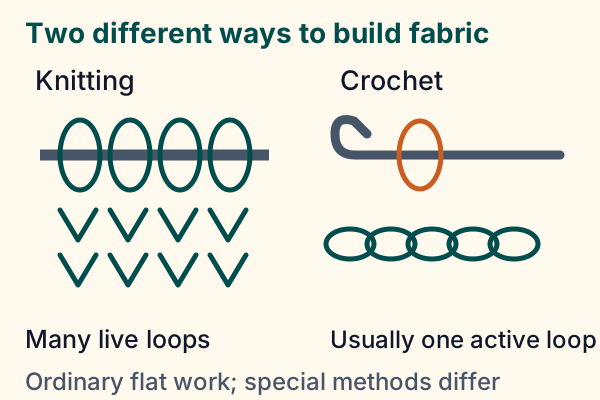
Choose knitting when the knitted fabric you want is the main goal; choose crochet when its stitch structure and construction suit the project. Knitting normally keeps a row of live loops on needles, while ordinary crochet usually works from one active loop on a hook. Both can make garments, accessories and blankets, so neither craft owns a whole project category.
| Priority | A useful starting direction | Important exception |
|---|---|---|
| Smooth stretchy fabric | Try a small knitted stockinette or rib sample | Knitted texture, fiber and gauge still control drape. |
| Build shapes or motifs one at a time | Try a crochet square or simple round | Shaping and joining still require accurate counts. |
| Easy pausing during ordinary work | Crochet can be parked with one enlarged loop or marker | Tunisian and other methods can retain many loops. |
| Recover a local plain-fabric mistake | Compare undoing crochet with ladder repair in knitting | Lace, cables and colorwork can complicate both. |
| Use less yarn or finish faster | Sample the actual candidate fabrics | There is no universal percentage or time winner. |
Tools and the first learning steps
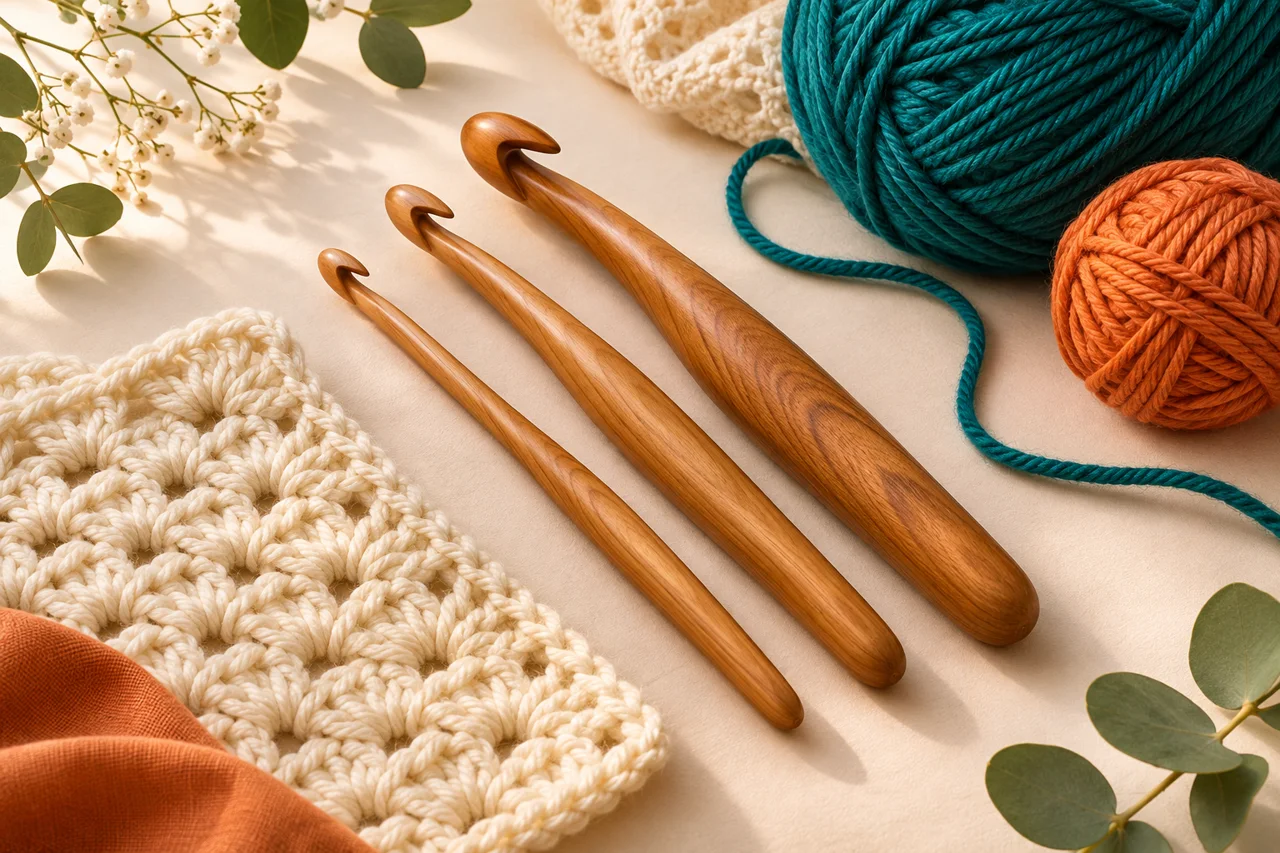
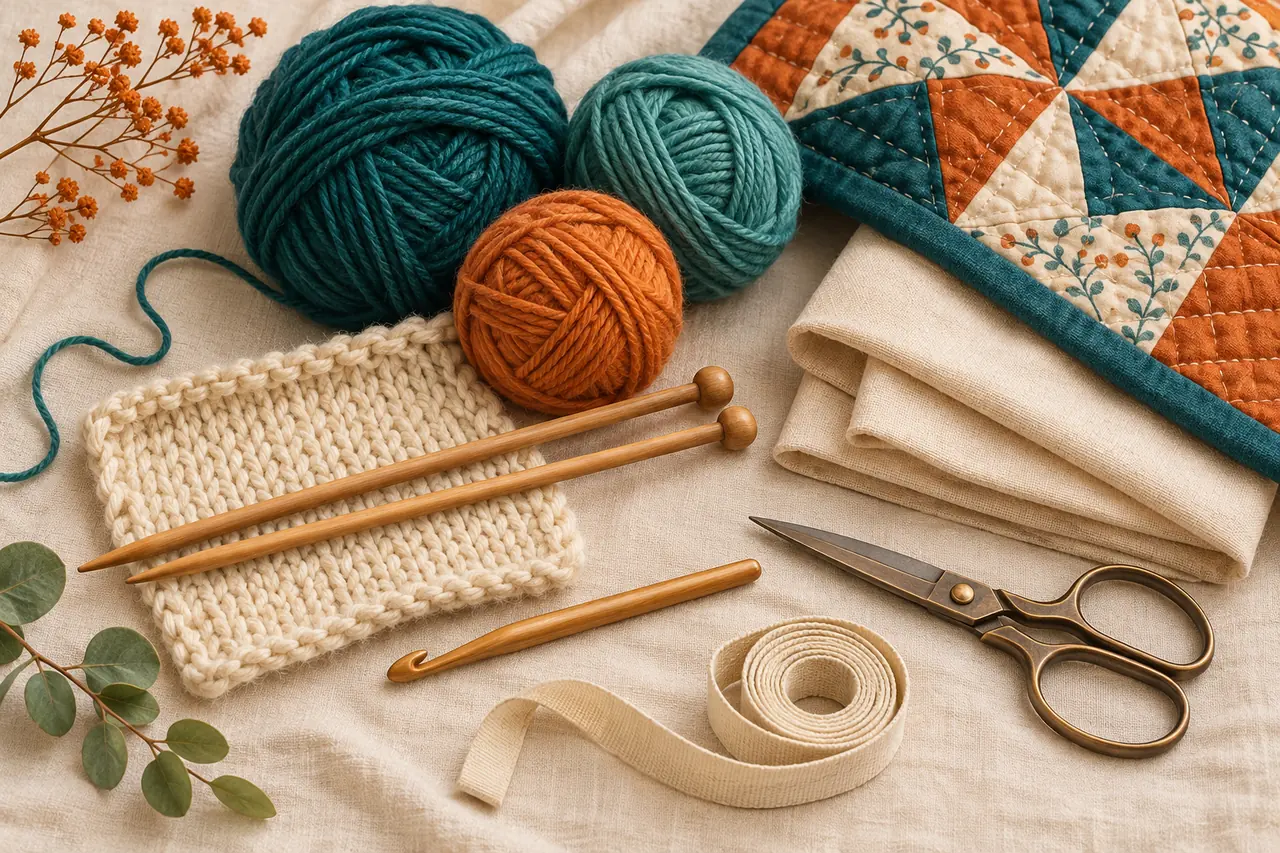
For knitting, begin with suitable needles and smooth light yarn. Learn a cast-on, knit, purl and bind-off, then how to count and secure a dropped loop. For crochet, begin with a suitable hook and the same kind of visible yarn. Learn a slip knot, chain, single crochet and how to turn without changing the stitch count. Both need scissors and a blunt yarn needle for finishing; markers make edge and round boundaries easier to track.
Compare fabric, not a stereotype
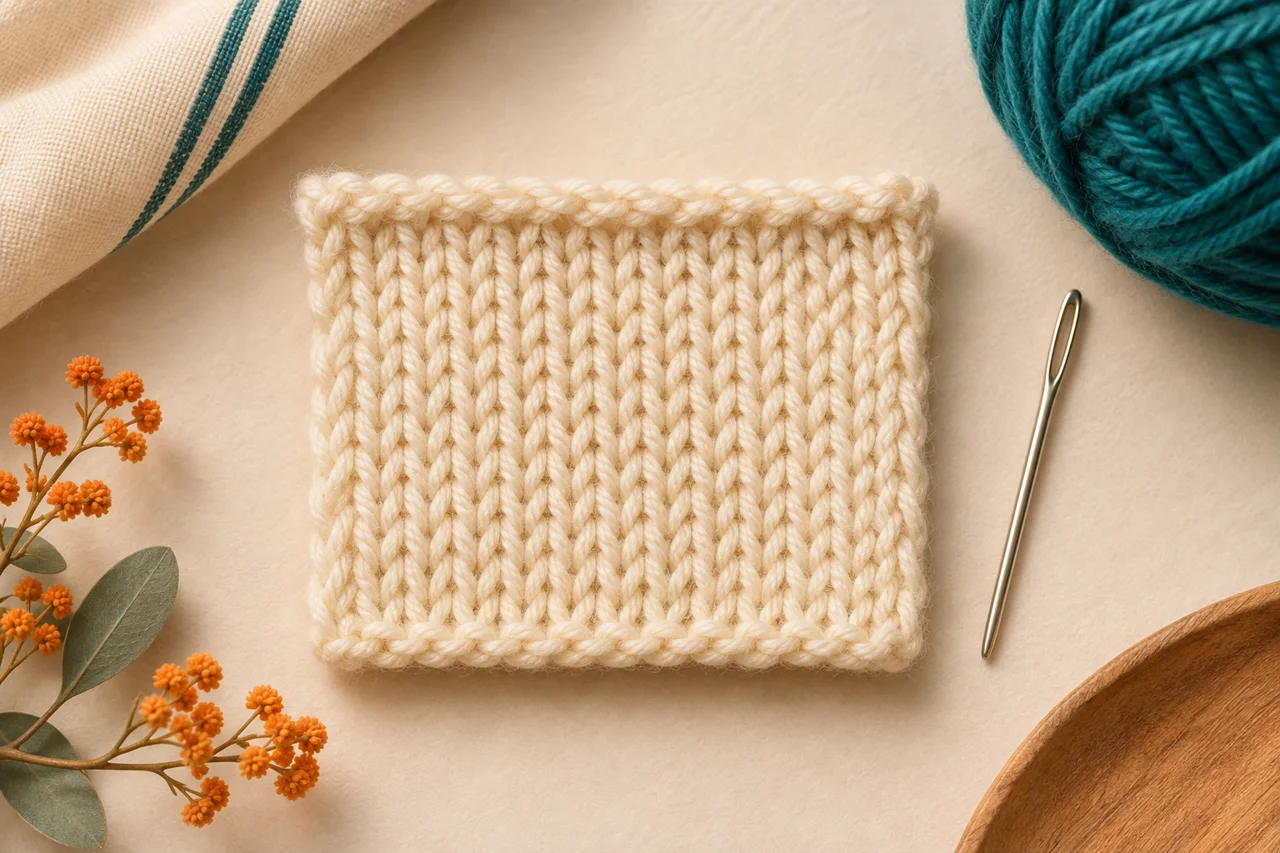
Plain stockinette creates columns of Vs and can curl at the edges. Ribbing can behave differently again. Single crochet, double crochet and moss stitch have different heights, gaps and flexibility from each other. Tool diameter, fiber, stitch pattern and working tension all affect thickness, stretch and drape. A loose crochet fabric can be more flexible than a tight knitted sample, so “crochet is stiff” is not a dependable buying or project-planning rule.
Make two small samples before buying a project quantity
Use one yarn to make a small knitted sample and a small crocheted sample in stitches you are considering. Finish both as the label permits. Compare the dry fabrics over the same central area: how they bend, how transparent they are against contrasting paper, whether they stretch in the direction needed and whether their edges suit the design. Label each with tool size and stitch. These observations answer your project question more directly than tool names alone.
Estimate yarn and time honestly
Equal stitch counts are not equal areas across crafts. For a fair yarn comparison, measure a finished sample’s area and its yarn consumption using a reliable length or weight method, then scale to the proposed area with appropriate finishing and pattern allowances. A sample containing a thick border should not stand in for a whole plain panel. Treat time the same way: your familiarity and the chosen stitch can matter more than the craft. No fixed claim that one always uses a certain percentage more yarn is made here.
Mistakes, pausing and recovery
In ordinary crochet, removing the hook and pulling the working yarn undoes stitches in reverse order; secure the final loop before putting it aside. A missed turning-chain stitch can still make the edge taper for many rows. In knitting, a live loop can run down a column if it slips from the needle, but an isolated plain dropped stitch can often be repaired locally with a hook. Secure it first. Neither craft is failure-proof, and a more complex pattern changes the difficulty of recovery.
Choose a small useful next step
For a first rectangular sample, start with long-tail cast-on and knit rows, or practise US single crochet with marked edges. For fitted garments, choose a published pattern you can follow and swatch in its actual stitch. For toys or motifs, learn round starts and shaping before promising a finished object. You can learn both crafts and choose per project; adding a crochet border to knitting is also a separate useful skill rather than a reason to declare one craft better.
Find a planning tool.
Explore free calculators for yarn, fabric and quilting projects.
Explore the planning toolSources & editorial notes
- Lion Brand: How to Knit for Beginners — https://www.lionbrand.com/pages/how-to-knit
- Craft Yarn Council: Single Crochet — https://www.craftyarncouncil.com/node/461
- Editorial review: primary sources accessed 13 November 2026; original practice examples and simplified schematics. No independent hands-on test or named expert review is claimed.